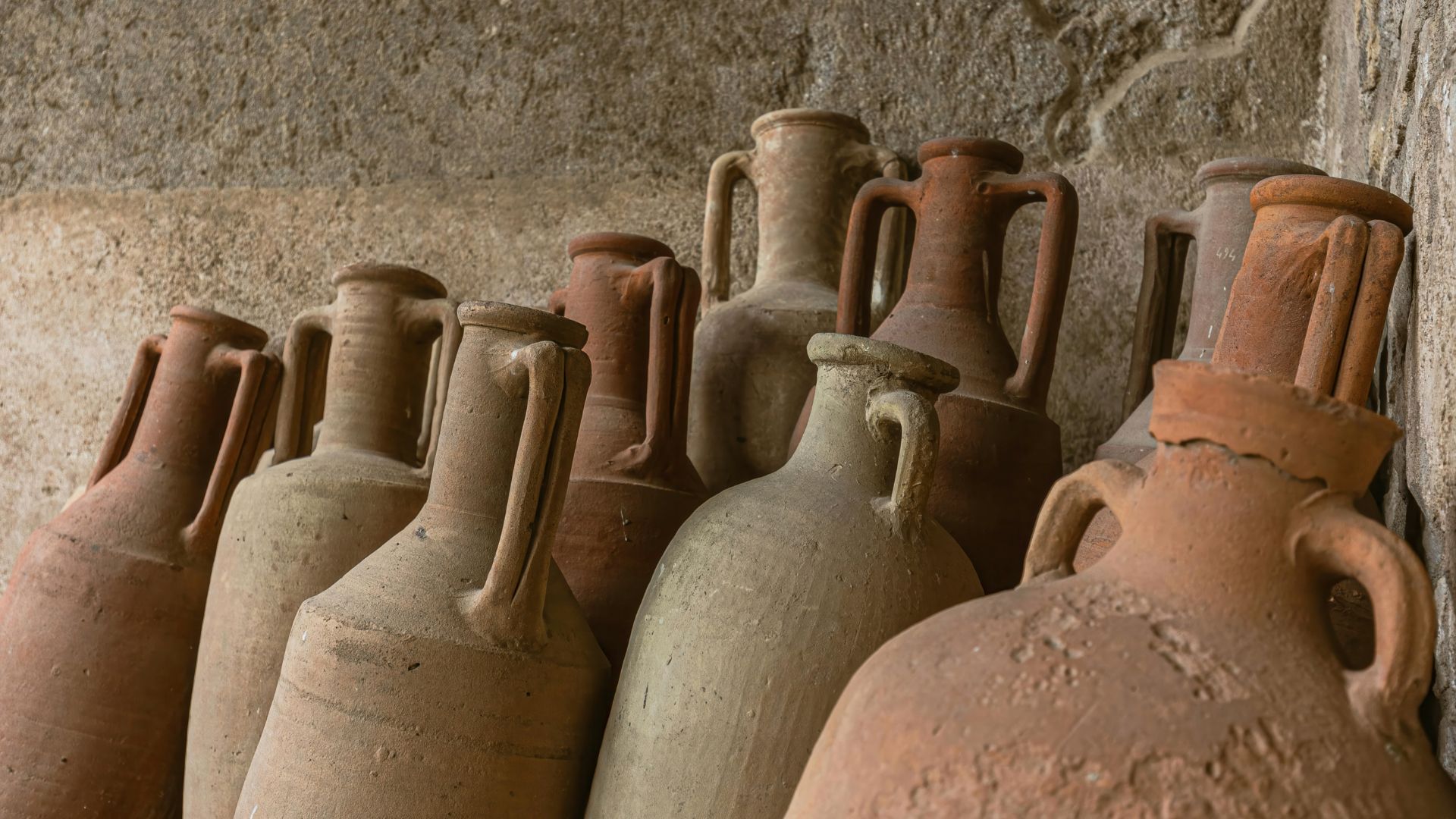
TOEFL Listening Part 4: Pottery Archeology
New TOEFL Listening Part 4 Format
As in the traditional TOEFL, the Listening section remains the most approachable section even after the revision. As long as you have built a solid foundation in vocabulary and grammar through the Reading section, you are unlikely to face major difficulties.
This is particularly true for Parts 1 and 2, which feature listening materials based on everyday situations. For these parts, the main goal of practice is not skill development itself but becoming familiar with the question formats.
Part 4, by contrast, is generally the most challenging area of the Listening section. It closely resembles the academic lectures found in the conventional TOEFL. Because Part 4 is longer and more information-dense than the other listening tasks, careful note-taking is essential when answering the questions that follow.
Structural Patterns of Academic Talks
In Listening Part 4, you will always hear a lecture from a specific academic field. At first, this may seem difficult to manage. However, once you understand the common structural patterns used in lectures, they become much easier to follow.
Most academic lectures in TOEFL Listening can be broadly classified into two types:
- Explanation of a phenomenon
- Discussion of a problem and proposed solutions
Although lectures vary in purpose and content, each type tends to follow a predictable structure.
Explanation of a Phenomenon
Lectures that explain a phenomenon typically follow this sequence:
- Introduction of the phenomenon
- Examples or evidence illustrating the phenomenon
- Applications and concluding remarks
Problems and Suggestion Related to Certain Topic
Lectures that focus on problems related to a topic often follow this structure:
- Introduction of the topic
- Description of the problems
- Suggested solutions or implications
So, quickly identifying which type of lecture you are listening to can significantly reduce the overall difficulty of the task.
Practice Question (Pottery Archeology)
1. What is the main purpose of the lecture?
A. To explain how residue in pottery can reveal gradual dietary change.
B. To describe why decorated pottery was valued in ancient settlements.
C. To compare ceramic cooking vessels with other archaeological objects.
D. To show that written records are usually inaccurate about food use.
2. According to the lecture, why must residue evidence be interpreted carefully?
A. Pottery fragments usually come from trade rather than local households.
B. Most ancient cooking pots were used only for ceremonial meals.
C. Residue studies focus mainly on surface decoration, not food remains.
D. Chemical traces may be changed by later use or soil conditions.
3. What does the lecture suggest about the shift to farming?
A. It spread first through communities that lacked animal products.
B. It occurred quickly once cultivated crops became widely available.
C. It was often a gradual process mixed with older food practices.
D. It depended mainly on replacing pottery with improved tools.
4. According to the lecture, what happened when food was heated in ceramic pots?
A. Small traces of fats and plant compounds entered the vessel walls.
B. The inside surface became too damaged for later chemical study.
C. Decorative patterns on the pottery began to change over time.
D. The pots released minerals that affected the taste of food.
5. What does the lecturer imply about historical change in daily life?
A. Household habits often changed faster than economic systems did.
B. Major transitions may look sharper in theory than in practice.
C. Ancient communities rarely combined old and new food sources.
D. Archaeologists rely too heavily on residue evidence alone.
Answers, Transcription, and Explanation
Question 1. A
Question 2. D
Question 3. C
Question 4. A
Question 5. B
Transcription
A broken pot may not seem very informative at first. Yet in many ancient settlements, fragments of cooking vessels have revealed changes in daily life that written records never mentioned. One especially useful clue is not the decoration on the surface, but the blackened residue left inside.
When people repeatedly heated food in ceramic pots, tiny traces of fats and plant compounds were absorbed into the vessel walls. Long after the original meal disappeared, some of those chemical traces remained. By studying them, specialists have been able to identify broad shifts in diet, including cases in which communities relied less on wild resources and more on cultivated crops.
The evidence, however, must be handled carefully. A single pot does not represent an entire population, and residues can be altered by soil conditions or later reuse. Even so, when similar patterns appear across many vessels from the same site, they can suggest larger economic and social changes.
In several regions, residue analysis has helped show that farming did not replace older food practices all at once. Instead, cultivated plants, gathered foods, and animal products often remained mixed together for long periods. What looks like a sharp historical transition may actually have been a slow and uneven adjustment in everyday household behavior.
Question 1: What is the main purpose of the lecture?
Correct Answer: A
Key evidence from the lecture:
- “One especially useful clue is not the decoration on the surface, but the blackened residue left inside.”
- “By studying them, specialists have been able to identify broad shifts in diet…”
The lecture is mainly concerned with how residue left inside ancient pottery can be used to reconstruct changes in diet over time. The focus is not on pottery decoration, pottery as an artifact category in general, or the unreliability of written records by themselves. Instead, the professor explains how chemical traces inside vessels provide evidence for long-term changes in household food practices. That overall goal is best captured by choice A.
Question 2: According to the lecture, why must residue evidence be interpreted carefully?
Correct Answer: D
Key evidence from the lecture:
- “A single pot does not represent an entire population, and residues can be altered by soil conditions or later reuse.”
The lecture directly warns against treating residue evidence too simply. The problem is not that pottery was mainly ceremonial or that the analysis focuses on decoration. Rather, chemical traces may be changed after the original use of the vessel, and one object alone cannot stand for an entire community. Choice D matches that caution most closely because it reflects one of the specific limits the lecturer mentions.
Question 3: What does the lecture suggest about the shift to farming?
Correct Answer: C
Key evidence from the lecture:
- “Farming did not replace older food practices all at once.”
- “Cultivated plants, gathered foods, and animal products often remained mixed together for long periods.”
This question tests whether you noticed the lecturer’s broader historical point. The move toward farming is presented as gradual and uneven rather than sudden. Older food practices continued alongside cultivated crops for quite a long time. That makes choice C correct. The other options distort the argument by suggesting a rapid transition, a dependence on tool replacement, or a specific condition the lecture never mentions.
Question 4: According to the lecture, what happened when food was heated in ceramic pots?
Correct Answer: A
Key evidence from the lecture:
- “When people repeatedly heated food in ceramic pots, tiny traces of fats and plant compounds were absorbed into the vessel walls.”
This is a detail question, and the answer comes almost directly from the lecture. The professor explains that repeated cooking caused chemical traces from food to enter the walls of the pottery. Those absorbed traces could remain long after the food itself was gone. Choice A restates that process accurately. The other options introduce damage, decoration changes, or mineral release, none of which is described in the lecture.
Question 5: What does the lecturer imply about historical change in daily life?
Correct Answer: B
Key evidence from the lecture:
- “What looks like a sharp historical transition may actually have been a slow and uneven adjustment in everyday household behavior.”
The lecturer closes by challenging the idea that major changes in the past always happened suddenly. Even when history seems to show a clear turning point, everyday behavior may have shifted gradually and inconsistently. That idea supports choice B. The lecture does not suggest that archaeologists rely only on residue evidence, nor does it say ancient communities avoided combining food sources. Instead, it implies that real change in daily life is often messier than simple historical labels suggest.
