TOEFL Complete the Words: Dendrochronology (Intermediate)
Dendrochronology in TOEFL
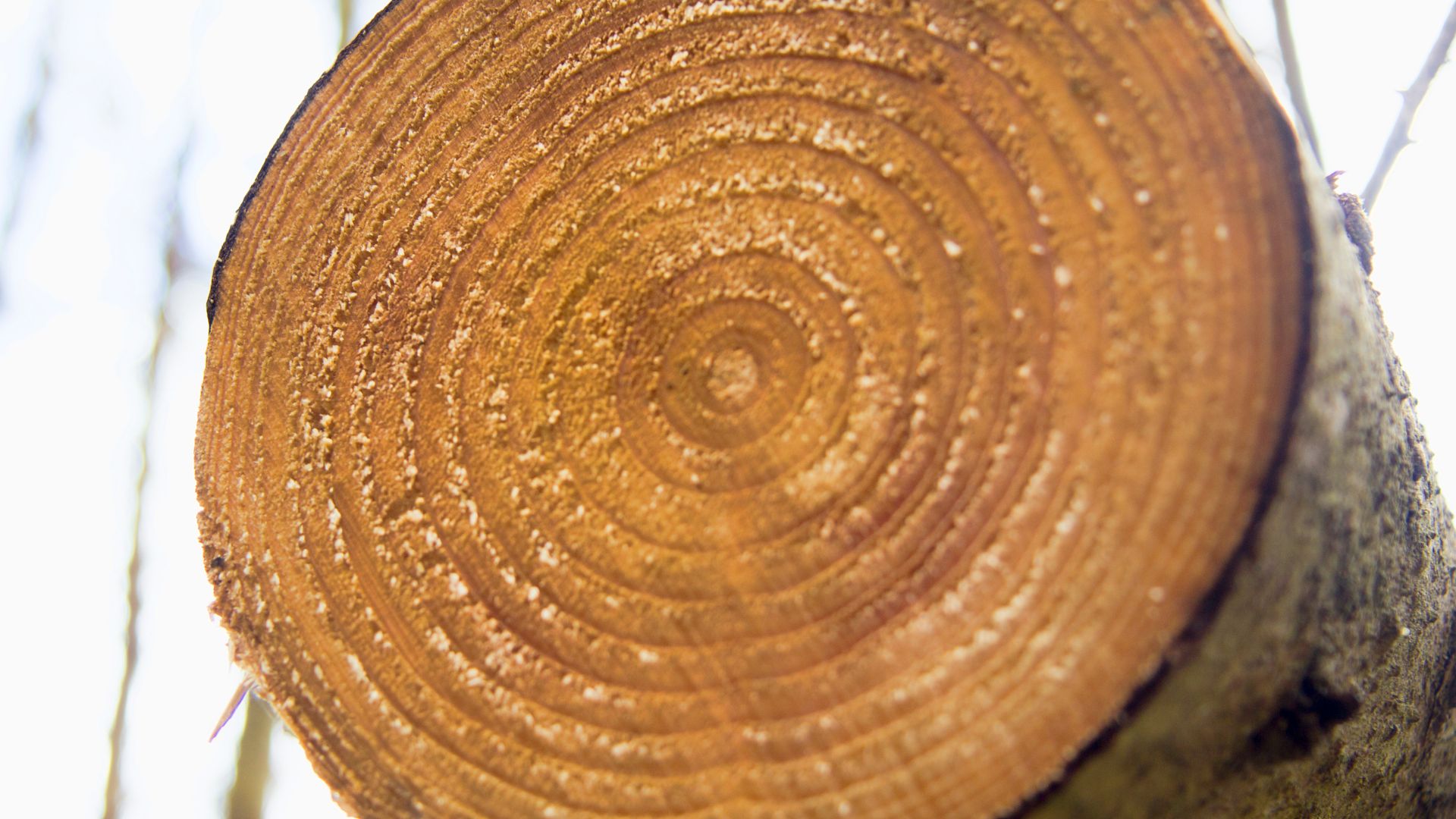
Dendrochronology is the study of tree rings as evidence of time. Instead of treating a tree as only a biological organism, the field reads it as a record of growth formed year by year. Because ring width can reflect environmental conditions, a tree may preserve information not only about age but also about the circumstances under which it grew.
Practice Questions
Question 1
Dendrochronology may sound specialized, yet it has ch_ _ _ _ _ how researchers date the pa_ _ . Each year, a tree fo_ _ _ a ring, and the wi_ _ _ of that ring ref_ _ _ _ _ growing con_ _ _ _ _ _ _ at the ti_ _. One sample, however, can be misleading because injury or local stress may disrupt the pat_ _ _ _. For that reason, specialists compare overlapping ring sequences taken from different sou_ _ _ _. When the patterns align, they can extend a chronology far beyond the life of a single tree. This method has become valuable in archaeology because beams from old structures can sometimes be matched to a known sequence. In favorable cases, the evidence can reveal not only age but also periods of unusual climate.
Explanation
Complete passage
Dendrochronology may sound specialized, yet it has changed how researchers date the past. Each year, a tree forms a ring, and the width of that ring reflects growing conditions at the time. One sample, however, can be misleading because injury or local stress may disrupt the pattern. For that reason, specialists compare overlapping ring sequences taken from different sources. When the patterns align, they can exttend a chronology far beyond the life of a single tree. This method has become valuable in archaeology because beams from old structures can sometimes be matchedto a known sequence. In favorable cases, the evidence can reveal not only age but also periods of unusual climate.
Dendrochronology is the study of tree rings as evidence of time. Because a tree usually produces one ring each year, those rings can function as a natural record. The key idea, however, is not simply counting rings in one tree. Researchers compare ring patterns across different samples and look for overlap. Once that overlap is secure, they can build a longer timeline that reaches beyond the lifespan of any single tree.
This matters in fields such as archaeology because wood from an old building may preserve part of that larger pattern. If the sequence matches an established chronology, the timber can be dated with considerable precision. Tree rings also carry environmental information, so the method can reveal more than age alone. In some cases, it helps researchers identify years marked by difficult growing conditions, which makes the field useful for climate history as well.
Question 2
A volcanic er_ _ _ _ _ _ can leave evidence far be_ _ _ _ the crater itself. In some regions, dendrochronology he_ _ _ researchers trace that impact by examining years _ _ which tree growth suddenly narrows. Ash in the atmosphere may bl_ _ _ sunlight for a time, which can shorten the growing season and reduce ri_ _ width even at a distance. The change in one tree pr_ _ _ _ little on its own. A wider pattern matters more. If many samples from the same per_ _ _ show a similar decline, the signal becomes harder to dismiss as local damage. In that way, tree rings can support volcanology by preserving biological evidence of an earlier atmospheric disturbance.
Explanation
Complete passage
A volcanic er_ _ _ _ _ _ can leave evidence far be_ _ _ _ the crater itself. In some regions, dendrochronology he_ _ _ researchers trace that impact by examining years _ _ which tree growth suddenly narrows. Ash in the atmosphere may bl_ _ _ sunlight for a time, which can shorten the growing season and reduce ri_ _ width even at a distance. The change in one tree pr_ _ _ _ little on its own. A wider pattern matters more. If many samples from the same per_ _ _ show a similar decline, the signal becomes harder to dismiss as local damage. In that way, tree rings can support volcanology by preserving biological evidence of an earlier atmospheric disturbance.
This topic connects dendrochronology with volcanology. Tree rings are often used to establish dates, but they can also preserve signs of environmental stress. A major eruption may inject material into the atmosphere and reduce the sunlight that reaches the surface. If that happens during the growing season, trees may form narrower rings than usual.
What makes this useful is comparison across many samples. A single narrow ring might reflect disease, competition, or some other local problem. A shared pattern across a broader area suggests that the cause was larger in scale. In that situation, tree growth becomes indirect evidence for a volcanic event and its aftermath. The value of dendrochronology here lies not only in dating, but in showing how atmospheric disruption affected living systems.
Question 3
Dendrochronology can contribute to art history in an unexpected way. Many early paintings in northern Europe were made on wooden panels, and those panels sometimes pre_ _ _ _ _ ring patterns cl_ _ _ _ _ enough to date the timber itself. That date does not identify the exact y_ _ _ of painting, because the wood may have been seasoned for some time before use. Even so, the evi_ _ _ _ _ can still narrow the possible period of production. It may also show whether several panels came f_ _ _ the same tree, which can li_ _ works that were not previously associated. For that reason, dendrochronology has become useful in questions of attribution. A panel that appears stylistically convincing may still require reevaluation if its wood proves too late for the artist to have used.
Explanation
Complete passage
Dendrochronology can contribute to art history in an unexpected way. Many early paintings in northern Europe were made on wooden panels, and those panels sometimes preserve ring patterns clearly enough to date the timber itself. That date does not identify the exact year of painting, because the wood may have been seasoned for some time before use. Even so, the evidence can still narrow the possible period of production. It may also show whether several panels came from the same tree, which can link works that were not previously associated. For that reason, dendrochronology has become useful in questions of attribution. A panel that appears stylistically convincing may still require reevaluation if its wood proves too late for the artist to have used.
Wooden panels can preserve a kind of hidden timeline that painters themselves never intended to leave behind. Before an image was painted, the tree had already spent decades producing annual rings, and those rings remained in the board after it was cut. That makes the support of a painting historically informative in its own right. Even when the painted surface has been restored, altered, or debated, the wood can still preserve evidence about when the material first became available for use.
This matters in art history because disputes about authorship are not settled by style alone. A panel may resemble the work of a particular painter, yet the timber may point to a later date that makes that attribution impossible. In other cases, several objects may turn out to share timber from the same source, which can suggest a workshop connection or a common supply network. Here, dendrochronology is valuable not because it replaces visual analysis, but because it introduces a different kind of historical constraint.
