TOEFL Listening Part 4: Architecture (Intermediate)
New TOEFL Listening Part 4 Format
As in the traditional TOEFL, the Listening section remains the most approachable section even after the revision. As long as you have built a solid foundation in vocabulary and grammar through the Reading section, you are unlikely to face major difficulties.
This is particularly true for Parts 1 and 2, which feature listening materials based on everyday situations. For these parts, the main goal of practice is not skill development itself but becoming familiar with the question formats.
Part 4, by contrast, is generally the most challenging component of the Listening section. It closely resembles the academic lectures found in the conventional TOEFL. Because Part 4 is longer and more information-dense than the other listening tasks, careful note-taking is essential when answering the questions that follow.
Structural Patterns of Academic Talks
In Listening Part 4, you will always hear a lecture from a specific academic field. At first, this may seem difficult to manage. However, once you understand the common structural patterns used in lectures, they become much easier to follow.
Most academic lectures in TOEFL Listening can be broadly classified into two types:
- Explanation of a phenomenon
- Discussion of a problem and proposed solutions
Although lectures vary in purpose and content, each type tends to follow a predictable structure.
Explanation of a Phenomenon
Lectures that explain a phenomenon typically follow this sequence:
- Introduction of the phenomenon
- Examples or evidence illustrating the phenomenon
- Applications and concluding remarks
Problems and Suggestion Related to Certain Topic
Lectures that focus on problems related to a topic often follow this structure:
- Introduction of the topic
- Description of the problems
- Suggested solutions or implications
So, quickly identifying which type of lecture you are listening to can significantly reduce the overall difficulty of the task.
Practice Question (Architecture)
1. What is the main topic of the lecture?
A. Artistic values that guide design choices in historic public buildings.
B. City planning rules affecting high-rise development in dense climates areas.
C. Rising costs of mechanical cooling in modern commercial construction projects.
D. Natural strategies for keeping buildings cool without air-conditioning systems.
2. According to the speaker, what is the primary function of wind catchers?
A. They block hot street air from entering during peak hours.
B. They trap moisture to raise humidity in very dry buildings.
C. They store daytime heat and release it slowly after sunset.
D. They draw upper air downward into interior rooms naturally.
3. Why does the professor mention the Eastgate Centre in Harare?
A. It shows passive cooling ideas working within a office complex.
B. It shows energy savings depending mainly on glass walls alone.
C. It shows climates where thick walls fail to stabilize temperatures.
D. It shows buildings that eliminate vents to reduce air movement.
4. What can be inferred about passive cooling strategies from the lecture?
A. Its performance rises as building size increases beyond typical levels.
B. Its effectiveness depends mostly on expensive materials used in walls.
C. Its success varies with climate, orientation, and how people behave.
D. Its results remain stable across cities with different seasonal patterns.
5. What will the professor most likely discuss next?
A. Detailed comparisons of mechanical cooling systems used in large offices.
B. Ways to blend passive design with newer building technologies effectively.
C. Historical reasons traditional cooling features disappeared from many urban homes.
D. Energy codes that regulate electricity use in commercial construction projects.
Answers, Transcription, and Explanation
Question 1. D
Question 2. D
Question 3. A
Question 4. C
Question 5. B
Transcription
In architectural history, buildings are often evaluated primarily for their aesthetic qualities. However, architects must also respond to environmental constraints, especially in regions with extreme climates. One approach that illustrates this balance is passive cooling, a design strategy that reduces reliance on mechanical air-conditioning by using natural airflow and thermal mass.
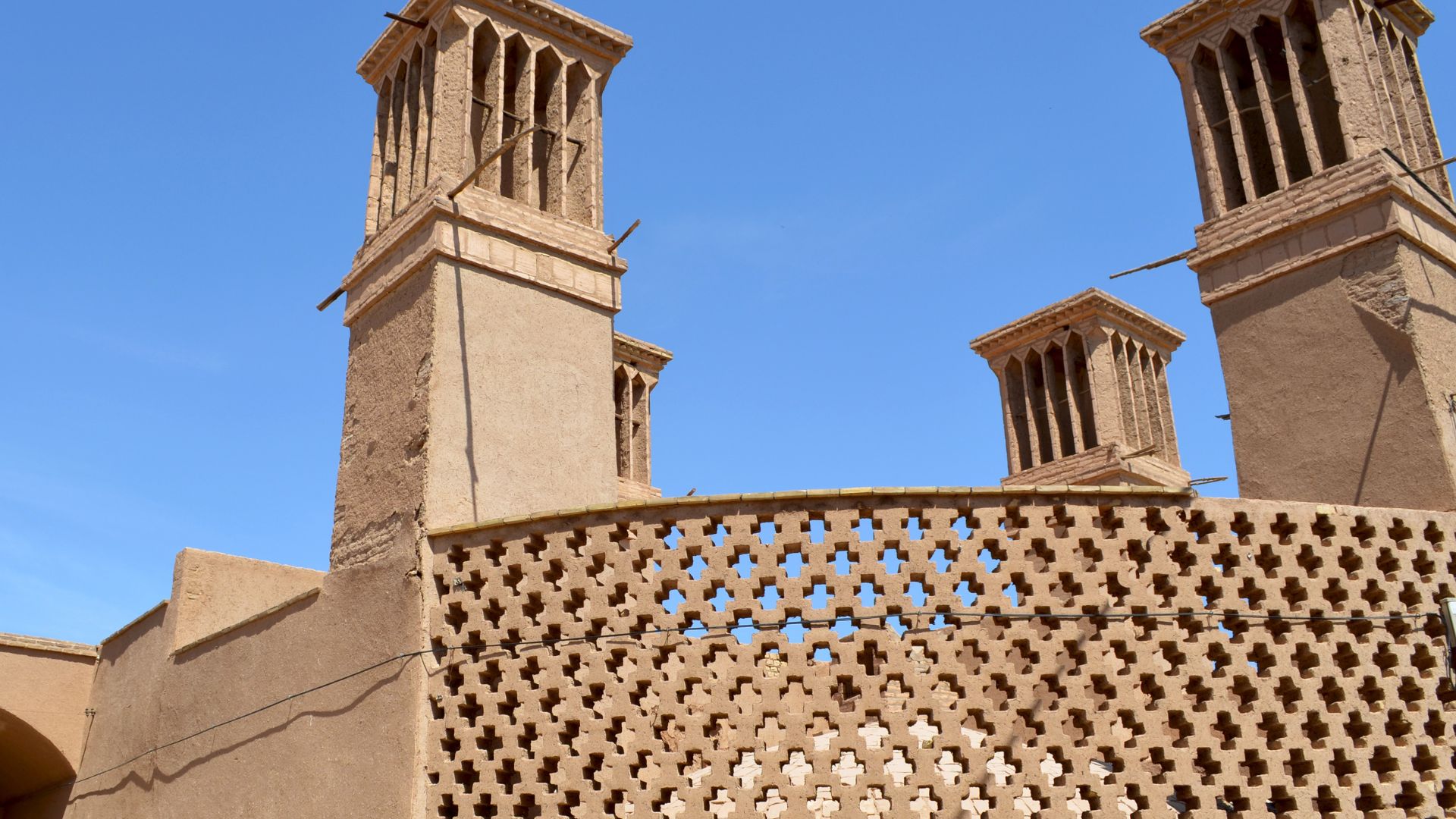
A well-known example can be found in traditional Middle Eastern architecture. In cities such as Yazd, Iran, many buildings incorporate wind catchers, tall vertical shafts designed to capture cooler air at higher elevations and direct it downward into interior spaces. These structures can lower indoor temperatures by several degrees, even when outdoor temperatures exceed 40 degrees Celsius.
Thermal mass plays a complementary role. Materials like stone or adobe absorb heat during the day and release it slowly at night, reducing temperature fluctuations. This principle has been adapted in modern architecture as well. For instance, the Eastgate Centre in Harare, Zimbabwe, uses thick concrete walls and strategically placed vents to regulate internal temperatures, allowing it to consume approximately 35 percent less energy than comparable office buildings.
Despite their effectiveness, passive cooling strategies are not universally applicable. Their success depends on factors such as local climate patterns, building orientation, and occupancy behavior. As urban populations grow and energy demands increase, architects are reexamining these traditional techniques to determine how they can be integrated with contemporary materials and technologies rather than replacing mechanical systems entirely.
Question 1: Correct Answer (D)
The lecture introduces passive cooling as its central theme. Early on, the professor contrasts architectural aesthetics with environmental constraints and then focuses on design approaches that reduce reliance on mechanical air-conditioning. The discussion consistently returns to natural airflow, thermal mass, and climate-responsive design, rather than costs, regulations, or artistic style. Because the lecture is organized around how buildings can stay cool through design rather than machinery, choice D best captures the overall topic.
Question 2: Correct Answer (D)
When explaining traditional Middle Eastern architecture, the professor describes wind catchers as vertical structures that capture cooler air at higher elevations and direct it downward into interior spaces. The key idea is air movement from above into the building, not blocking heat, storing warmth, or controlling humidity. Option D reflects this airflow function accurately, while the other choices describe processes that were never attributed to wind catchers in the lecture.
Question 3: Correct Answer (A)
The Eastgate Centre is introduced as a modern example of principles that originated in traditional architecture. The professor explicitly says that ideas like thermal mass and controlled ventilation have been adapted in modern architecture, and the Eastgate Centre demonstrates this adaptation in a contemporary office building. The reference is not about glass walls, failed designs, or eliminating airflow, but about showing that passive cooling concepts still work in present-day structures.
Question 4: Correct Answer (C)
Near the end of the lecture, the professor explains that passive cooling is not universally effective. Its performance depends on several factors, including local climate patterns, how the building is positioned, and how occupants use the space. This allows us to infer that passive cooling does not work the same way everywhere or under all conditions. Choice C accurately summarizes this idea, while the other options wrongly suggest a single dominant factor or consistent performance.
Question 5: Correct Answer (B)
The lecture concludes by stating that architects are now examining how traditional cooling techniques can be integrated with contemporary materials and technologies rather than completely replacing mechanical systems. This naturally sets up a discussion about combining passive and modern approaches. Option B follows directly from this closing idea, whereas the other choices would require an abrupt shift away from the lecture’s current direction.
