TOEFL Listening Part 4: Architectural Acoustics
New TOEFL Listening Part 4 Format
As in the traditional TOEFL, the Listening section remains the most approachable section even after the revision. As long as you have built a solid foundation in vocabulary and grammar through the Reading section, you are unlikely to face major difficulties.
This is particularly true for Parts 1 and 2, which feature listening materials based on everyday situations. For these parts, the main goal of practice is not skill development itself but becoming familiar with the question formats.
Part 4, by contrast, is generally the most challenging area of the Listening section. It closely resembles the academic lectures found in the conventional TOEFL. Because Part 4 is longer and more information-dense than the other listening tasks, careful note-taking is essential when answering the questions that follow.
Structural Patterns of Academic Talks
In Listening Part 4, you will always hear a lecture from a specific academic field. At first, this may seem difficult to manage. However, once you understand the common structural patterns used in lectures, they become much easier to follow.
Most academic lectures in TOEFL Listening can be broadly classified into two types:
- Explanation of a phenomenon
- Discussion of a problem and proposed solutions
Although lectures vary in purpose and content, each type tends to follow a predictable structure.
Explanation of a Phenomenon
Lectures that explain a phenomenon typically follow this sequence:
- Introduction of the phenomenon
- Examples or evidence illustrating the phenomenon
- Applications and concluding remarks
Problems and Suggestion Related to Certain Topic
Lectures that focus on problems related to a topic often follow this structure:
- Introduction of the topic
- Description of the problems
- Suggested solutions or implications
So, quickly identifying which type of lecture you are listening to can significantly reduce the overall difficulty of the task.
Practice Question (Architectural Acoustics)
1. What is the main purpose of the lecture?
A. To explain why bronze vessels became common in Roman homes.
B. To describe how Roman builders tried to improve speech clarity.
C. To compare Roman halls with modern electronic sound systems.
D. To show that large buildings naturally produce stronger echoes.
2. According to the lecture, why could too much reflection be a problem?
A. It could make spoken words harder to understand.
B. It could prevent sound from reaching distant listeners.
C. It could weaken the effect of hard interior surfaces.
D. It could damage stone walls over long periods of use.
3. What does the lecturer say about bronze vessels?
A. They were placed mainly to decorate formal speaking spaces.
B. They may have improved resonance, but their effect is controversial.
C. They absorbed reflected sound better than wood panels did.
D. They were used only in buildings meant for musical performance.
4. According to the lecture, what methods were used to reduce acoustic problems?
A. Builders covered walls with soft materials to absorb echoes.
B. Builders widened entrances so sound could leave more quickly.
C. Builders lowered ceilings to keep voices near the audience.
D. Builders used shape and interior spacing to disrupt reflections.
5. What does the lecturer imply about Roman acoustic design?
A. It focused more on intelligibility than on simple loudness.
B. It depended mainly on making all surfaces highly reflective.
C. It worked best in buildings with very limited audience size.
D. It was based on the same goals as modern sound technology.
Answers, Transcription, and Explanation
Question 1. B
Question 2. A
Question 3. B
Question 4. D
Question 5. A
Transcription
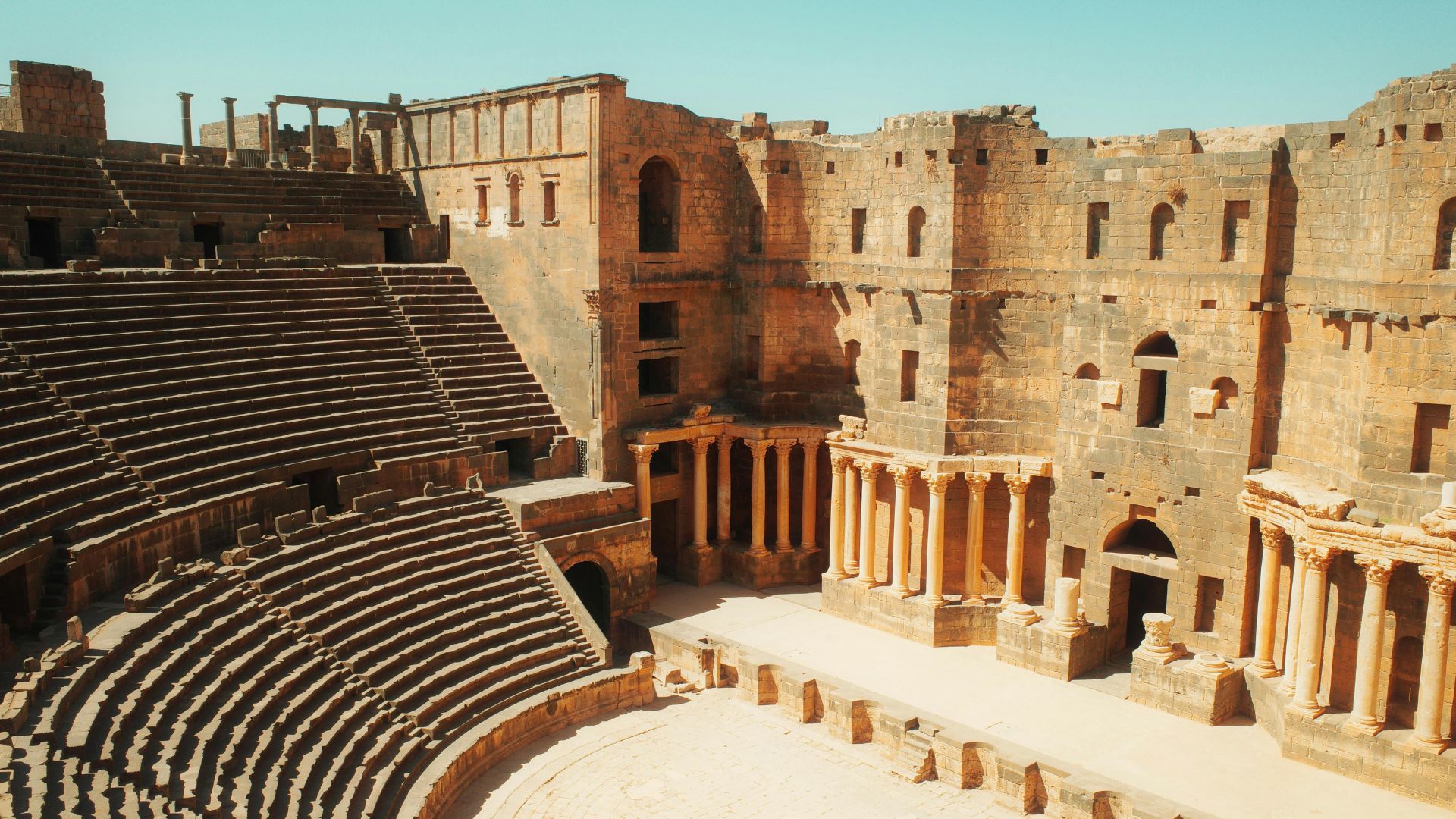
Picture entering a large ancient building and noticing that even a quiet voice seems to carry across the space. In some Roman public structures, this was not an accident of size alone. Sound behavior was shaped by design choices that affected how speech moved through the building.
In enclosed halls and small theaters, curved walls could help reflect sound toward an audience. Hard surfaces such as stone also played an important role, since they reflected more sound than softer materials would have. But Roman builders did not simply try to make every surface reflect as much sound as possible. Too much reflection could blur speech by causing echoes, especially in spaces used for formal speaking.
To reduce that problem, builders sometimes relied on shape, spacing, and interior features that helped break up reflected waves. In certain cases, bronze vessels were even placed in selected locations. Ancient writers claimed that these vessels could improve resonance, though modern scholars still debate how effective they actually were in practice.
What matters most is that Roman acoustic design was not based on amplification in the modern sense. It was an effort to control clarity. Rather than making every sound louder, builders tried to ensure that spoken words remained distinct enough to be understood by large audiences.
Question 1: What is the main purpose of the lecture?
Correct Answer: B
Key evidence from the lecture:
- “Sound behavior was shaped by design choices that affected how speech moved through the building.”
- “What matters most is that Roman acoustic design was not based on amplification in the modern sense. It was an effort to control clarity.”
This lecture is mainly about how Roman builders designed interior spaces so speech could be heard more clearly. The professor is not discussing domestic architecture, modern sound systems, or the general fact that large buildings produce echoes. Those ideas either do not appear in the lecture or appear only indirectly. The central point is that Roman builders made specific design choices to improve the clarity of spoken language in large public spaces.
Question 2: According to the lecture, why could too much reflection be a problem?
Correct Answer: A
Key evidence from the lecture:
- “Too much reflection could blur speech by causing echoes, especially in spaces used for formal speaking.”
The professor explains that reflection was useful up to a point, but excessive reflection created echoes that reduced clarity. In other words, listeners might still hear sound, but the words would become harder to understand. That is why choice A is correct. The issue is not that sound fails to travel far enough, nor that stone walls are physically damaged. The problem is reduced intelligibility.
Question 3: What does the lecturer say about bronze vessels?
Correct Answer: B
Key evidence from the lecture:
- “In certain cases, bronze vessels were even placed in selected locations.”
- “Ancient writers claimed that these vessels could improve resonance, though modern scholars still debate how effective they actually were in practice.”
The lecture presents bronze vessels as a debated acoustic feature. The professor does not state with certainty that they worked, but says ancient sources claimed they improved resonance and that modern scholars are still unsure about their actual effect. That matches choice B. The other choices distort the lecture by turning the vessels into decoration, sound-absorbing devices, or equipment used only in music venues.
Question 4: According to the lecture, what methods were used to reduce acoustic problems?
Correct Answer: D
Key evidence from the lecture:
- “To reduce that problem, builders sometimes relied on shape, spacing, and interior features that helped break up reflected waves.”
This question targets a concrete detail from the middle of the lecture. The professor explains that Roman builders tried to control reflected sound by using the layout of the space itself, including shape and spacing. Nothing is said about soft wall coverings, wider entrances, or lower ceilings. Those choices may sound plausible, but they are not part of the method described here.
Question 5: What does the lecturer imply about Roman acoustic design?
Correct Answer: A
Key evidence from the lecture:
- “What matters most is that Roman acoustic design was not based on amplification in the modern sense.”
- “Rather than making every sound louder, builders tried to ensure that spoken words remained distinct enough to be understood by large audiences.”
The final part of the lecture draws a clear contrast between loudness and clarity. The professor implies that Roman builders were less concerned with making sound stronger than with making speech understandable. That is exactly the idea in choice A. The other options go against the lecture: the design did not depend on maximum reflection, it was not limited to small audiences, and it was explicitly distinguished from modern amplification goals.
