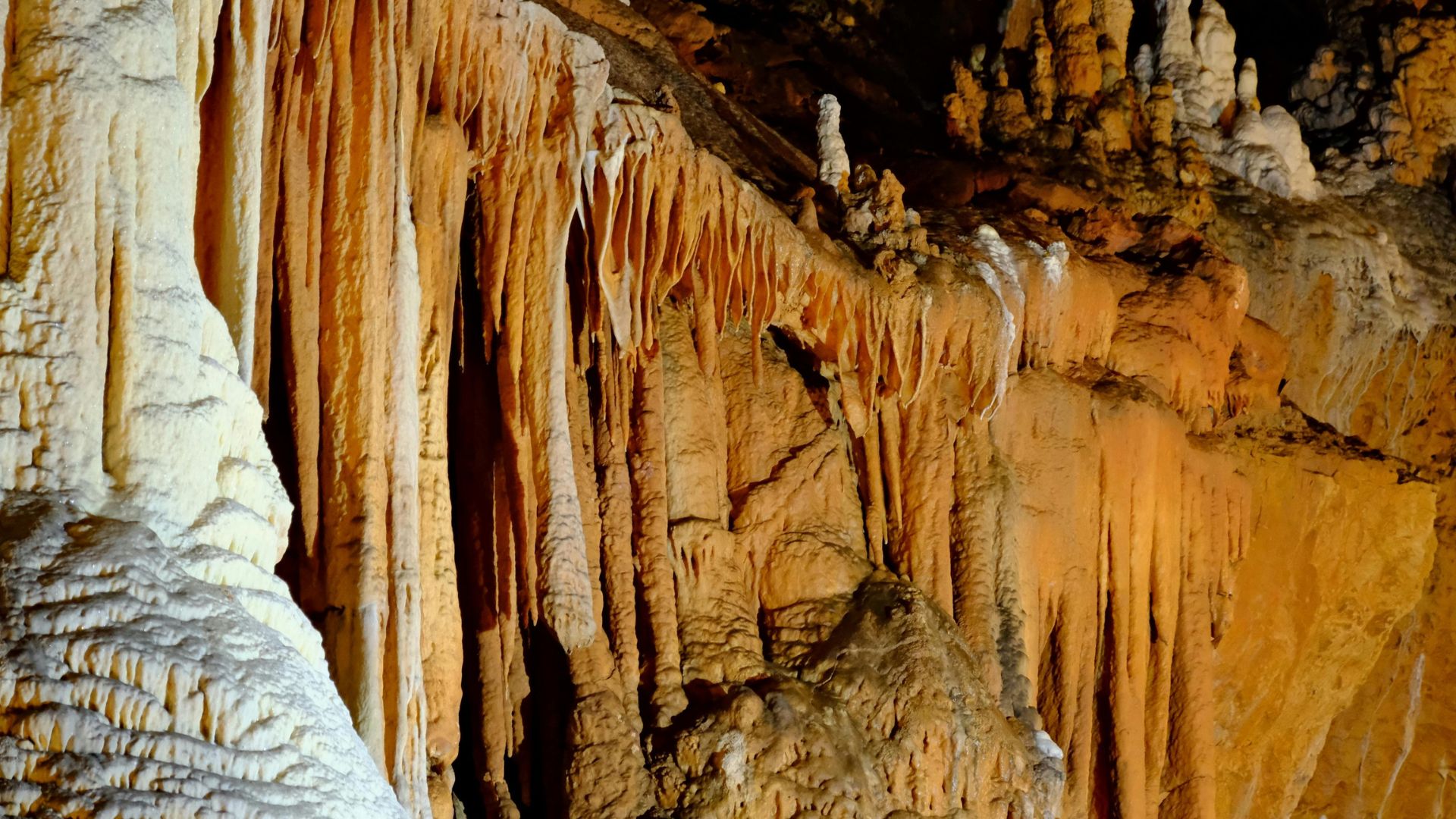
TOEFL Listening Part 4: Lecture on the Formation of Limestone Caves
New TOEFL Listening Part 4 Format
As in the traditional TOEFL, the Listening section remains the most approachable section even after the revision. As long as you have built a solid foundation in vocabulary and grammar through the Reading section, you are unlikely to face major difficulties.
This is particularly true for Parts 1 and 2, which feature listening materials based on everyday situations. For these parts, the main goal of practice is not skill development itself but becoming familiar with the question formats.
Part 4, by contrast, is generally the most challenging area of the Listening section. It closely resembles the academic lectures found in the conventional TOEFL. Because Part 4 is longer and more information-dense than the other listening tasks, careful note-taking is essential when answering the questions that follow.
Structural Patterns of Academic Talks
In Listening Part 4, you will always hear a lecture from a specific academic field. At first, this may seem difficult to manage. However, once you understand the common structural patterns used in lectures, they become much easier to follow.
Most academic lectures in TOEFL Listening can be broadly classified into two types:
- Explanation of a phenomenon
- Discussion of a problem and proposed solutions
Although lectures vary in purpose and content, each type tends to follow a predictable structure.
Explanation of a Phenomenon
Lectures that explain a phenomenon typically follow this sequence:
- Introduction of the phenomenon
- Examples or evidence illustrating the phenomenon
- Applications and concluding remarks
Problems and Suggestion Related to Certain Topic
Lectures that focus on problems related to a topic often follow this structure:
- Introduction of the topic
- Description of the problems
- Suggested solutions or implications
So, quickly identifying which type of lecture you are listening to can significantly reduce the overall difficulty of the task.
Practice Question (Limestone Cave)
1. What is the main purpose of the lecture?
A. To explain why cave ceilings often collapse after mineral layers grow.
B. To compare the growth rates of columns in warm caves and dry caves.
C. To show how dissolved minerals can gradually build a column from both ends.
D. To describe how minerals collect in many parts of a cave at different speeds.
2. According to the lecture, what happens before minerals are deposited inside the cave?
A. Rainwater must remain chemically pure before it can enter the cave system.
B. Groundwater dissolves limestone as it moves through soil and rock layers.
C. Air pressure inside caves directly pushes minerals toward the cave floor.
D. Heat from deep rock melts minerals before they are redeposited in caves.
3. According to the lecture, how does a stalagmite form?
A. They appear when dripping water leaves minerals on the cave floor.
B. They form only after cave air becomes warmer than the rock around it.
C. They result from strong underground currents shaping loose cave sediment.
D. They develop when fallen ceiling fragments harden under cave pressure.
4. What does the lecturer say about the way cave columns grow?
A. Small shifts in drip rate or airflow can affect how deposits develop.
B. Columns always grow at the same rate because cave conditions stay stable.
C. Once a column forms, it no longer changes in shape or mineral content.
D. Most columns form rapidly after a single season of heavy rainfall.
5. What does the lecturer imply about cave columns?
A. A cave with many columns must once have contained a large underground river.
B. Any cave with stalactites will eventually produce identical cave columns.
C. A column records long-term cave conditions rather than one brief event.
D. Column growth depends only on how long water has dripped in one location.
Answers, Transcription, and Explanation
Question 1. C
Question 2. B
Question 3. A
Question 4. A
Question 5. C
Transcription
Imagine standing deep inside a limestone cave and seeing a thick stone pillar that connects the ceiling to the floor. At first glance, it may look like a solid structure that formed all at once. In fact, such a pillar usually develops through an extremely slow process involving moving water and dissolved minerals.
The process begins above the cave, where rainwater passes through soil and absorbs carbon dioxide. This slightly acidic water then moves through cracks in limestone, dissolving small amounts of calcium carbonate along the way. When the water finally reaches an open cave chamber, conditions change. Some of the dissolved carbon dioxide escapes into the cave air, causing a small amount of calcium carbonate to come out of solution.
If the mineral is left on the ceiling, a stalactite begins to grow downward. If drops fall to the floor below, they can leave more mineral behind and gradually build a stalagmite upward. Over many centuries, these two formations may meet, creating a column. Researchers emphasize that this is not a simple, uniform process. Because growth depends on factors such as drip rate, airflow, temperature, and mineral content, columns vary greatly in shape, width, and texture, even within the same cave passage.
Question 1: What is the main purpose of the lecture?
Correct Answer: C
Key evidence from the lecture:
- “A thick stone pillar … usually develops through an extremely slow process involving moving water and dissolved minerals.”
- “If the mineral is left on the ceiling, a stalactite begins to grow downward.”
- “If drops fall to the floor below, they can leave more mineral behind and gradually build a stalagmite upward.”
- “Over many centuries, these two formations may meet, creating a column.”
The lecture is centered on the formation of a cave column through mineral deposition. More specifically, the professor explains how dissolved minerals carried by water are deposited both above and below, eventually allowing a formation from the ceiling and one from the floor to connect. That makes choice C the best summary of the lecture’s overall aim.
Question 2: According to the lecture, what happens before minerals are deposited inside the cave?
Correct Answer: B
Key evidence from the lecture:
- “Rainwater passes through soil and absorbs carbon dioxide.”
- “This slightly acidic water then moves through cracks in limestone, dissolving small amounts of calcium carbonate along the way.”
Before minerals are deposited in the cave, the water first travels through soil and rock and dissolves material from the limestone. In other words, mineral deposition is preceded by mineral dissolution. The lecture presents deposition as the later stage of a longer chemical process, not as something that happens immediately when water enters the cave.
Question 3: According to the lecture, how does a stalagmite form?
Correct Answer: A
Key evidence from the lecture:
- “If drops fall to the floor below, they can leave more mineral behind and gradually build a stalagmite upward.”
The lecture defines a stalagmite by where the mineral is deposited: on the cave floor. Water drips down from above, and each drop leaves behind a small amount of mineral. Over a very long period, those deposits accumulate upward from the ground. That direct description clearly supports choice A.
Question 4: What does the lecturer say about the way cave columns grow?
Correct Answer: A
Key evidence from the lecture:
- “Researchers emphasize that this is not a simple, uniform process.”
- “Because growth depends on factors such as drip rate, airflow, temperature, and mineral content…”
This part of the lecture highlights variability. The professor specifically warns listeners not to imagine column growth as a steady, identical process in every case. Instead, the form and rate of growth depend on several changing conditions, including airflow and drip rate. Therefore, choice A correctly reflects the idea that even small environmental differences can influence development.
Question 5: What does the lecturer imply about cave columns?
Correct Answer: C
Key evidence from the lecture:
- “Such a pillar usually develops through an extremely slow process.”
- “Over many centuries, these two formations may meet, creating a column.”
- “Growth depends on factors such as drip rate, airflow, temperature, and mineral content…”
The lecturer implies that a cave column reflects a long history of environmental conditions rather than one isolated event. Because column growth is slow and shaped by multiple factors over time, the final structure can be understood as the result of long-term interaction between water flow, chemistry, and cave conditions. That is why choice C is the strongest inference.
