Epigraphy: Understanding Texts Carved on Materials

By Last Updated: April 14, 2026Categories: Academic ReadingTags: ,

Epigraphy

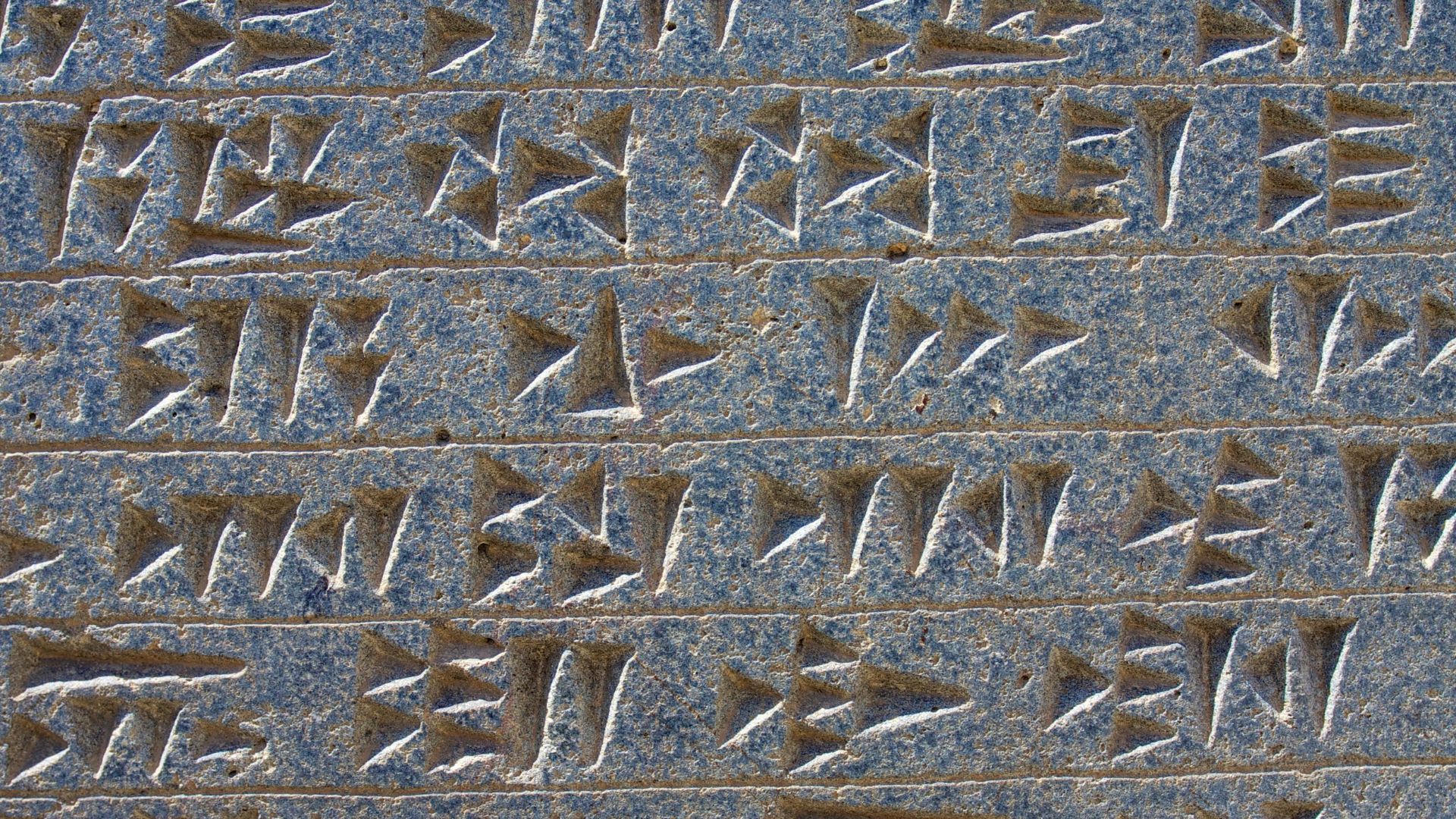
Epigraphy is the study of texts that are carved, engraved, or written on durable materials such as stone, metal, pottery, or walls.

In simple terms, it is a field that examines inscriptions left in the ancient world, such as

  • public laws
  • tomb inscriptions
  • temple carvings
  • official decrees
  • writing on coins or monuments

By studying these texts, scholars can learn about politics, religion, society, language, and daily life in past civilizations.

What makes epigraphy especially important is that inscriptions are usually tied to a specific object and location, so they can show not only what was written but also where, why, and for whom it was displayed.

So, in short, epigraphy is the study of inscriptions as historical evidence.

Practice Questions

Question 1: Reading Broken Voices: The Challenges of Epigraphy

Reading Broken Voices: The Challenges of Epigraphy

For many historians, the value of an inscription lies not simply in its wording but in the circumstances of its survival. Unlike a manuscript copied and stored in a library, an inscription may reach the present in a damaged, displaced, or incomplete state. A stone slab can break, a bronze tablet can be melted down and reused, and a wall text can lose crucial lines through erosion. As a result, epigraphers rarely begin with a fully legible message. They often work instead with scattered letters, uncertain dates, and objects removed from their original setting. The task is therefore not just to read an ancient text, but to reconstruct the conditions under which that text once functioned.

That challenge becomes even greater when the inscription itself was intended for a narrow audience. Some texts were placed high on walls, inside tombs, or in restricted sacred spaces where only a small group could see them clearly. In such cases, the purpose of the inscription may not have been to communicate detailed information efficiently. It may instead have marked authority, commemorated an offering, or signaled the presence of ritual knowledge. Modern readers can easily assume that any written text was meant to be read closely by large numbers of people, yet this assumption may distort the historical role the inscription originally played.

Because of these difficulties, epigraphy depends heavily on comparison. A partially preserved text may become clearer when matched with formulaic language found elsewhere. Repeated expressions, official titles, and conventional dedicatory phrases can help scholars restore missing sections with reasonable confidence. At the same time, reliance on such parallels carries its own risk. If researchers force a damaged inscription into an overly familiar pattern, they may erase evidence of local practice or unusual wording. Successful interpretation therefore requires balance: patterns are indispensable, but so is caution toward anything that does not fit them neatly.

---
(1) What is the main focus of the passage?

(2) What does the passage suggest about the condition in which inscriptions often survive?

(3) Why does the author mention texts placed in tombs or sacred spaces?

(4) In the passage, the word "distort" is closest in meaning to:

(5) What does the passage indicate about the use of comparison in epigraphy?

Explanation

Epigraphy is not simply about reading old words carved on stone or metal. In many cases, the greater challenge lies in understanding what kind of object the inscription belonged to, where it was originally displayed, and how much of it has actually survived. A text may reach modern scholars in a fractured or relocated condition, with missing lines and unclear context. Because of that, interpreting an inscription often involves reconstructing a lost situation rather than merely translating a message.

Another important point is that inscriptions were not always designed for easy reading by a wide audience. Some were placed in locations that limited visibility, such as tomb interiors or restricted sacred spaces. In those cases, the writing may have carried symbolic, ceremonial, or authoritative value even if only a small number of people could examine it closely. This means modern readers must be careful not to assume that every inscription functioned like an ordinary public document.

The passage also highlights the way epigraphers work with comparison. When parts of a text are missing, familiar titles, repeated phrasing, and common formal expressions can help scholars restore what has been lost. Even so, comparison has limits. If researchers rely too heavily on what seems typical, they may smooth away unusual wording or local practices that actually matter. The field therefore depends on both pattern recognition and restraint.

Seen in this light, epigraphy is a discipline that requires patience and judgment. It asks scholars to connect material condition, physical placement, linguistic form, and historical purpose. Rather than treating inscriptions as simple containers of information, the passage presents them as fragile traces whose meaning emerges only through careful reconstruction.

Question 2: What Bilingual Inscriptions Reveal

What Bilingual Inscriptions Reveal

Not all inscriptions speak in a single voice. In many ancient regions, official texts were carved in two languages, sometimes side by side on the same monument. At first, such bilingual inscriptions may seem useful mainly because one language can help scholars decipher the other. Yet their significance goes far beyond translation. The decision to display more than one language in a public text can reveal how rulers imagined their audiences, how communities interacted, and which forms of speech carried prestige in a particular setting.

A bilingual inscription was not always intended to communicate the same message to everyone in exactly the same way. One language might occupy the upper section of a stone and use larger letters, while the other appears below in a more compact script. In some cases, the wording is not perfectly equivalent across the two versions. Titles may be expanded in one language, omitted in another, or adjusted to fit different political traditions. These differences suggest that bilingual inscriptions were carefully shaped documents rather than straightforward mirrors of a single original text.

For historians, such inscriptions are especially valuable because they preserve moments of negotiation between linguistic communities. A city under imperial rule, for instance, might honor a local deity in one language while presenting the same act in the political vocabulary of the empire in another. The monument then becomes evidence not only of what was announced, but also of how authority was translated across cultural boundaries. Instead of treating bilingual inscriptions as simple aids to decoding lost languages, scholars increasingly examine them as records of hierarchy, adaptation, and coexistence.

---
(1) What is the main focus of the passage?

(2) What does the passage suggest about the use of two languages in one inscription?

(3) Why does the author mention differences in letter size and placement?

(4) In the passage, the word “equivalent” is closest in meaning to

(5) What does the passage indicate about bilingual inscriptions under imperial rule?

Explanation

A stone bearing two languages can look, at first, like a convenient aid for interpretation. Yet the real interest of such an object often begins once the two versions stop matching perfectly. A change in letter size, a shift in placement, or a small difference in wording may indicate that the inscription was designed with more than simple duplication in mind. These visual and verbal choices suggest that the monument was shaped for different readers or different public purposes.

This is why bilingual inscriptions are so useful to historians. They allow researchers to see how a single event could be framed differently depending on linguistic and political context. A local community might recognize one version as part of its own religious or civic tradition, while an imperial audience could understand the other through the vocabulary of rule and administration. The inscription therefore becomes evidence of mediation rather than mere repetition.

The passage also encourages a broader view of public writing. Language on a monument does not simply transmit information in a neutral way. It can rank audiences, assign prestige, and position groups in relation to power. When two languages appear together, that arrangement may preserve traces of accommodation, imbalance, or strategic inclusion.

For that reason, bilingual inscriptions are valuable not only as linguistic evidence but also as historical records of contact between communities. They show how authority could be presented across cultural boundaries and how public messages were adjusted without being reduced to a single uniform form.

Question 3: Marks of Exchange: Inscriptions and Ancient Trade

Marks of Exchange: Inscriptions and Ancient Trade

Inscriptions connected with trade are often brief, but their brevity can be misleading. A name scratched onto a storage jar, a weight stamped with an official mark, or a short text cut into a harbor monument may seem too limited to reveal much. Yet when such pieces are examined together, they can illuminate the movement of goods, the reach of institutions, and the routines that made long-distance exchange possible. For this reason, epigraphers do not treat commercial inscriptions as minor leftovers from economic life. Instead, they study them as evidence of how trade was organized and monitored.

One of the most useful features of these texts is repetition. The same personal names, abbreviations, symbols, or place markers may appear across distant sites, allowing scholars to trace patterns that would be invisible in a single find. A merchant’s mark found on containers in several ports, for example, may suggest a durable network rather than an isolated shipment. Official stamps can be equally revealing. They may indicate that goods were inspected, taxed, standardized, or approved before entering circulation. In this way, inscriptions do more than identify objects. They point to systems of trust, regulation, and accountability that supported exchange.

At the same time, such evidence must be handled carefully. A repeated mark does not always prove direct contact between two places, since containers could be reused and symbols might be copied or imitated. Nor does an official stamp guarantee tight state control over every stage of distribution. Commercial inscriptions are valuable precisely because they are partial: they preserve small traces of economic activity without presenting a complete picture. Their importance lies in the patterns they suggest when read alongside archaeological context, rather than in any single text taken alone.

---
(1) What is the main focus of the passage?

(2) What does the passage suggest about short commercial inscriptions?

(3) Why does the author mention repeated names, symbols, and place markers?

(4) In the passage, the word “durable” is closest in meaning to

(5) What caution does the passage give about repeated marks?

Explanation

One of the easiest mistakes in reading trade-related inscriptions is to underestimate them. A scratched name or stamped symbol may look too slight to matter, especially compared with a long law code or a formal public decree. The passage pushes against that instinct. Its central point is that these small marks become historically meaningful once they are read as parts of a larger commercial environment.

The discussion is built around scale. A single jar mark may say very little by itself, but the same mark appearing across several ports begins to suggest regular movement, repeated handling, or institutional oversight. In other words, the value of the evidence does not come from verbal richness. It comes from recurrence, distribution, and association. This is why the passage treats commercial inscriptions less as isolated messages than as fragments of a wider system.

At the same time, the text refuses to turn those patterns into automatic conclusions. Reuse, imitation, and incomplete circulation histories make the evidence unstable. A repeated stamp may point to connection, but it does not guarantee direct exchange in any simple sense. That caution matters because it keeps the reader from equating resemblance with proof.

What emerges, then, is a view of epigraphy that depends on disciplined restraint. Trade inscriptions are useful not because they tell the whole story, but because they preserve limited signs that can be combined with archaeological context. Their interpretive force lies somewhere between insignificance and certainty. The passage invites readers to work in that middle space.

Hi, I completed a Master’s program at Purdue University, where I specialized in test design and assessment effectiveness. My academic focus was English-language standardized tests, including the TOEFL, IELTS, ACT, SAT, and GRE. I began writing these articles because, when I was preparing for the SAT and GRE myself, I found few resources that explained the tests in a systematic and practical way. My goal is to create materials in which solving questions naturally builds the background knowledge needed for the exams, helping learners manage both content and strategy more effectively.
Leave A Comment