
TOEFL Speaking Part 1: Announcement to Visitors at a Water Treatment Facility
Explanation and Note-Taking Strategy for Speaking Section Part 1
In Speaking Section Part 1, your task is to repeat the utterance exactly as you hear it. This includes not only content words but also small grammatical elements such as prepositions and articles (a, an, the). Missing even one of these can affect your accuracy.
There are two possible ways to approach this task:
- Rely on memory by focusing entirely on listening and repeating afterward.
- Take notes word by word to reconstruct the sentence.
If you have exceptionally strong short-term memory, the first approach may work. However, for most test takers, it is unstable. A more reliable strategy is the second one: using notes to support accurate reconstruction.
Of course, spelling each word you hear is unrealistic; you will easily miss some words. Instead, for Speaking part 1, it’s effective to use abbreviated words and symbols to take notes word by word.
Of course, writing down every word exactly as you hear it is unrealistic, and trying to do so will almost certainly cause you to miss parts of the sentence. Instead, for Speaking Part 1, a more effective approach is to take notes word by word using abbreviated forms and symbols. This allows you to capture the full structure of the utterance without slowing down your listening.
Tips for Note-Taking for Speaking Section Part 1
If you want to know effective note-taking strategies for Speaking section part 1 in more detail, please refer to this article as well.


Briefly stating, the following are some elements of effective note-taking for this part:
- Do not write full words: Abbreviate everything, as long as you can accurately reconstruct the original sentence later.
- Use symbols whenever possible: Symbols are generally faster and easier to write than letters. Replacing words or expressions with symbols helps you keep pace with the audio and reduces cognitive load.
- Include plural markers when needed: Whether a noun is singular or plural does matter in this task. To avoid confusion, it is very helpful to leave a plural marker when a noun is in plural form.
- Make sure your notes imply word count: Your notes should help you infer how many words are in the sentence. This prevents you from accidentally omitting words or adding extra ones when repeating the sentence.
- Heavily abbreviate the first and last words: The human memory system naturally retains information at the beginning and the end of an utterance more effectively. Because of this, detailed notes are unnecessary for these positions; minimal abbreviations are usually sufficient.
Now, keeping these points in mind, let’s practice the Listen and Repeat question format. Each listening item includes a transcription and a model note to help you evaluate your note-taking efficiency.
Practice Question
Sentence 1, Transcription And Model Note
Transcription and model note
Transcription: Welcome to the water treatment visitor center.
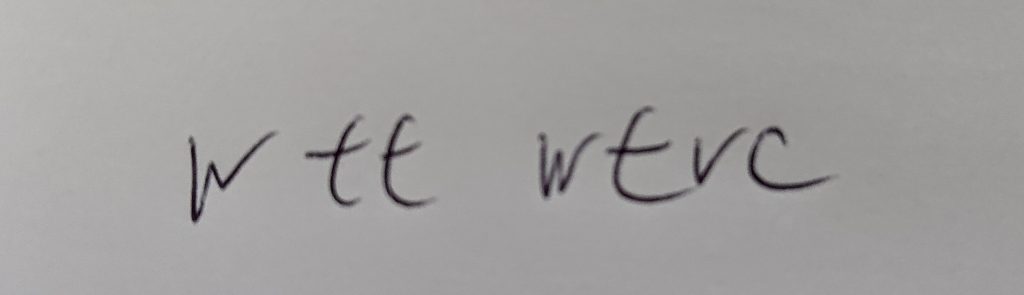
Each abbreviated word and symbol corresponds to the following ideas:
- w: Welcome
- t t: to the
- wtvc: reserve
The phrase “to the” appears very frequently in English. When you hear it, you don’t need to write it out in full. Instead, you can note it as “t t” or use any symbol that allows you to recall the phrase accurately later. As long as you can reconstruct the original expression during repetition, the exact form of your notes does not matter.
Sentence 2, Transcription And Model Note
Transcription and model note
Transcription: Please gather near the briefing desk.
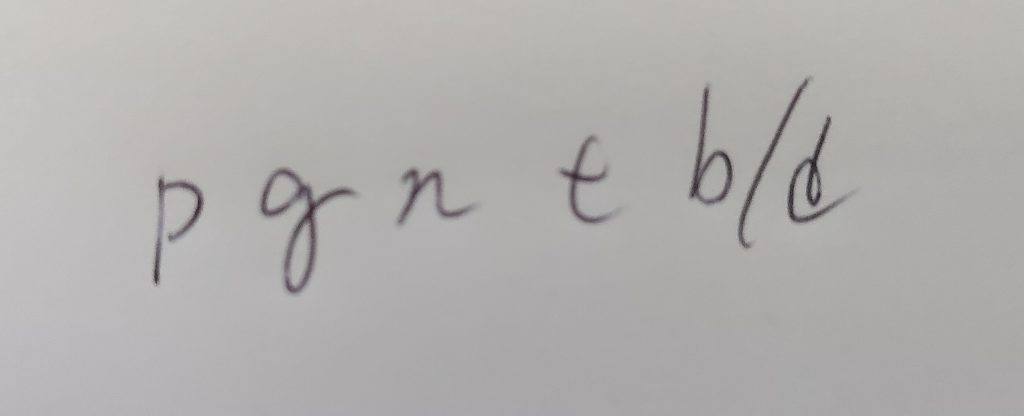
Each abbreviated word and symbol corresponds to the following ideas:
- p: Please
- g: gather
- n: near
- t: the
- b/d: briefing desk.
When “please” appears at the beginning of a sentence, you can simply jot down “p.” In most cases, “please” is the only word commonly used to open this type of instruction, so this abbreviation works without causing confusion.
How you take notes is ultimately a personal choice. Some people also prefer using a slash to represent compound words, especially when a phrase consists of multiple nouns. This method can help reduce writing time while still keeping the meaning clear.
Sentence 3, Transcription And Model Note
Transcription and model note
Transcription: Safety overview will begin shortly here.
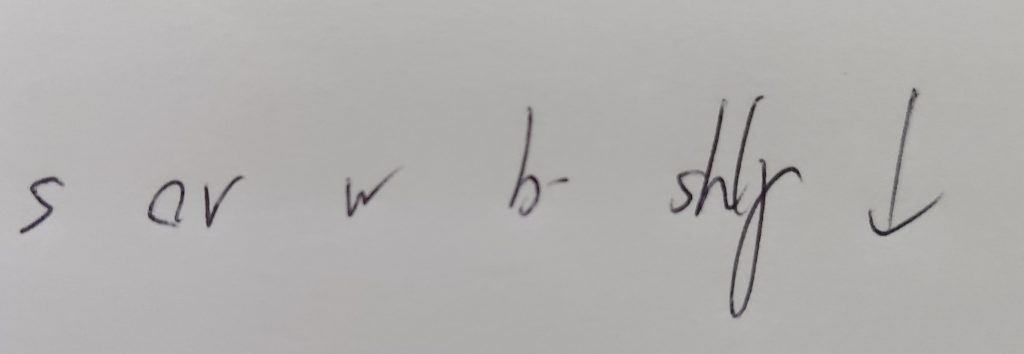
Each abbreviated word and symbol corresponds to the following ideas:
- s: Safety
- ov: overview
- w: will
- b-: begin
- shly: shortly
- ↓: here
According to how the human memory system works, we tend to remember information presented at the beginning and end of an input more easily. In this case, the first word “safety” and the final word “here” are relatively easy to recall, even if they are heavily abbreviated.
For this reason, you can save time and effort when noting these positions. In the model notes, the first word safety is reduced to “s”, yet it can still be recalled without difficulty. The same idea applies to the final word. A simple downward arrow is often enough to remind you of “here.”
Sentence 4, Transcription And Model Note
Transcription and model note
Transcription: Hard hats are required inside operational areas.
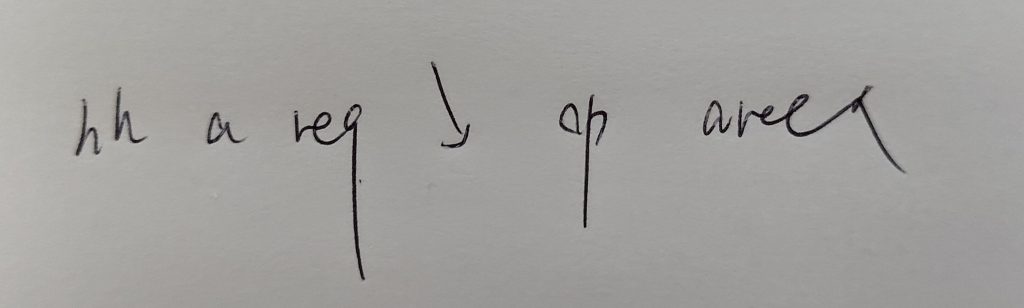
Each abbreviated word and symbol corresponds to the following ideas:
- hh: hard hats
- a: are
- req: required
- arrow: inside
- op: operational
- areas: areas
The expression “are required” appears frequently in this part, so it is effective to prepare a specific abbreviation or symbol for it beforehand. Even a simple form such as “ar” can work as a clear reminder of “are required.”
Sentence 5, Transcription And Model Note
Transcription and model note
Transcription: Please note alarms may sound during routine system testing.
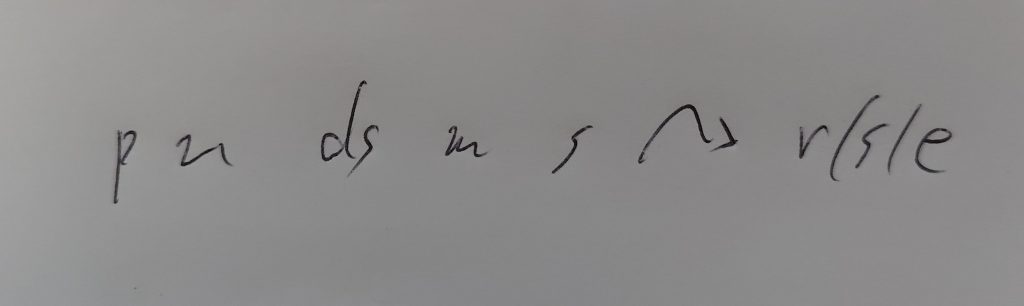
Each abbreviated word and symbol corresponds to the following ideas:
- p: Please
- n: note
- als: alarms
- m: may
- s: sound
- arc arrow: during
- r/s/t: routine system testing
Often, when a sentence begins with the letter “p,” the word is “please.” Other words rarely appear in this position, so writing just “p” is usually sufficient. Even such a simple note allows you to recall the word “please” without difficulty.
Another point worth noting is “als,” which represents “alarms.” The plural marker “s” is intentionally included to avoid confusion between singular and plural forms. This kind of detail is especially important in Speaking Part 1, where you are required to repeat exactly what you hear.
Sentence 6, Transcription And Model Note
Transcription and model note
Transcription: For now, tours continue as scheduled unless staff announce changes over the loudspeakers.
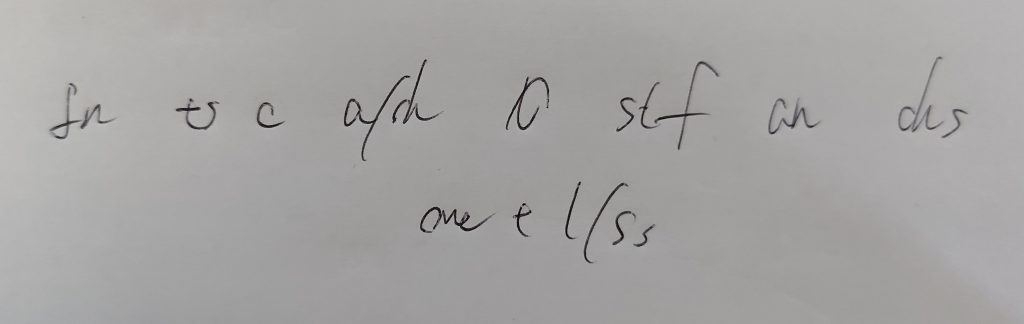
Each abbreviated word and symbol corresponds to the following ideas:
- fn: For now,
- ts: tours
- c: continue
- a/sch: as scheduled
- symbol: unless
- stf: staff
- an: announce
- chs: changes
- ovr: over
- t: the
- l/ss: loudspeakers
“As scheduled” is another expression that appears frequently in the new TOEFL. Because it is highly predictable in this context, an even shorter abbreviation or a simple symbol may be enough to recall its meaning.
Sentence 7, Transcription And Model Note
Transcription and model note
Transcription: Just so you know, any updates will be shared through announcements during your visit.
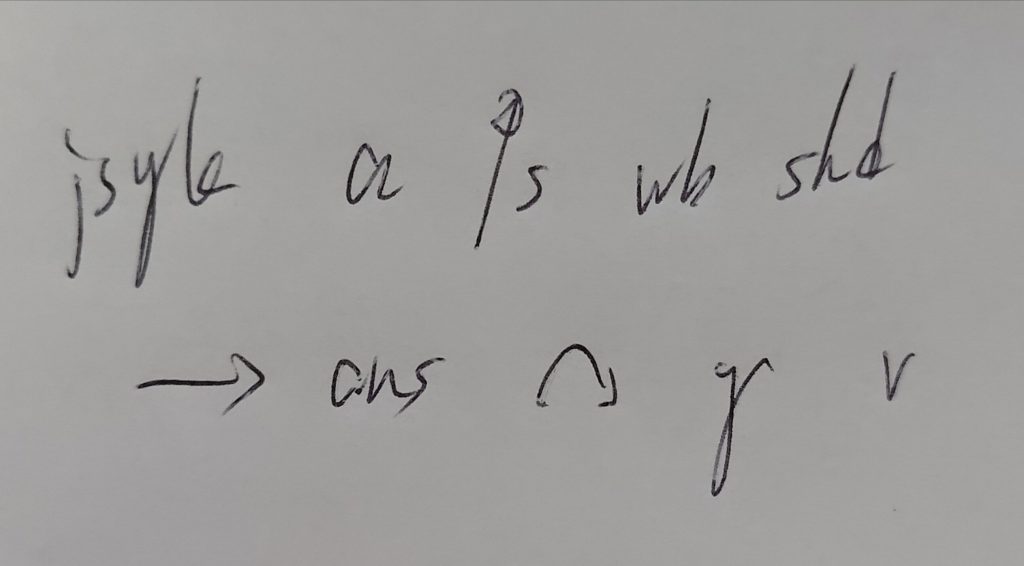
Each abbreviated word and symbol corresponds to the following ideas:
- jsyk: Just so you know
- a: any
- ↑s: updates
- wb: will be
- shd: shared
- →: nearby
- ans: to
- arc arrow: answer
- y: questions
- v: throughout
